Gluten Free Frosting Easy Recipes Tips and Safe Ingredients
Gluten-free baking has become more common as people learn about food sensitivities and healthier choices. One area that often confuses beginners is frosting. Many assume frosting is always safe, but that is not always true. This guide explains everything you need to know about gluten free frosting, from ingredients to recipes and storage tips.
Need To Know: Zaxbys Menu Guide 2026 Best Items, Prices, and What to Order
What Is Gluten Free Frosting?
Gluten fre frosting is any frosting made without ingredients that contain gluten. Gluten is a protein found in wheat, barley, and rye. Some frostings may include hidden gluten through flavorings, thickeners, or additives.
Basic frosting usually contains butter, sugar, milk, and flavoring. These are naturally gluten-free. However, packaged frostings or certain recipes may include ingredients like malt extract or wheat-based starch.
Key point: Always check labels and ingredient sources carefully.
Why Gluten-Free Frosting Matters
People choose gluten-free options for different reasons. Some have celiac disease, while others have gluten sensitivity. Even small traces of gluten can cause problems for them.
Using gluten free frostng ensures:
- Safe consumption for sensitive individuals
- No digestive discomfort
- Better control over ingredients
- Peace of mind when serving others
It also helps when baking for events, as you can safely serve more guests.
Common Ingredients
Understanding ingredients helps you avoid hidden gluten. Most basic frosting ingredients are safe, but some require attention.
Safe Ingredients
| Ingredient | Notes |
|---|---|
| Butter | Naturally gluten-free |
| Powdered sugar | Usually safe, but check for added starch |
| Milk or cream | Safe |
| Vanilla extract | Most are safe, but verify labeling |
| Cocoa powder | Naturally gluten-free |
Ingredients to Watch
| Ingredient | Risk |
|---|---|
| Food coloring | Some contain gluten-based additives |
| Flavor extracts | May include gluten carriers |
| Pre-made frosting | Often contains hidden gluten |
| Sprinkles | Some use wheat starch |
Always read labels and choose certified gluten-free products when possible.
Types
There are many frosting styles you can make without gluten. Each offers a different texture and flavor.
Buttercream Frosting
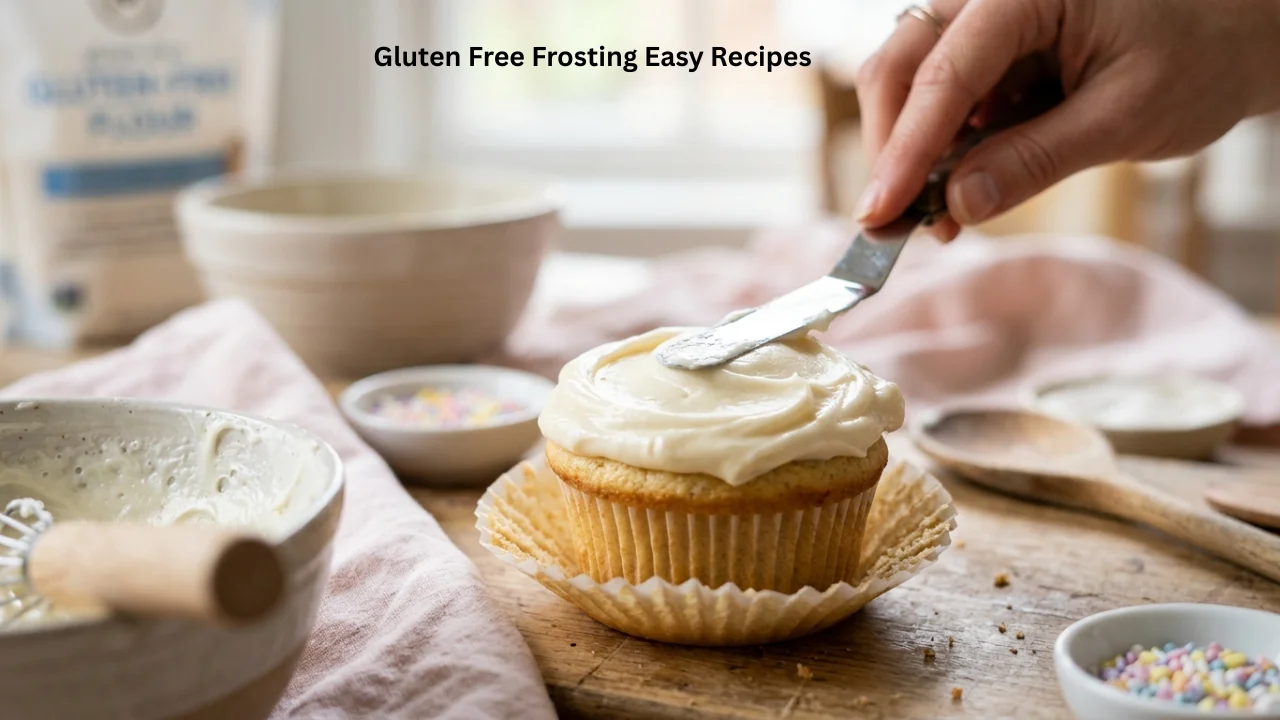
Buttercream is the most popular option. It uses butter, powdered sugar, milk, and vanilla. It is smooth, creamy, and easy to spread.
This type of gluten free frosting works well for cakes, cupcakes, and cookies.
Cream Cheese Frosting
Cream cheese frosting has a rich and slightly tangy taste. It pairs well with carrot cake, red velvet cake, and muffins.
It is also naturally gluten-free when made with safe ingredients.
Whipped Frosting
Whipped frosting uses heavy cream and sugar. It feels light and airy. This frosting is less sweet than buttercream and works well on fruit cakes.
Chocolate Frosting
Chocolate frosting uses cocoa powder or melted chocolate. It adds deep flavor and works for many desserts.
Just ensure your chocolate is labeled gluten-free.
Easy Homemade Gluten Free Frosting Recipe
Making frosting at home gives you full control. Here is a simple recipe you can follow.
Ingredients
- 1 cup butter (softened)
- 3 cups powdered sugar
- 2–3 tablespoons milk
- 1 teaspoon vanilla extract
Instructions
- Beat the butter until smooth.
- Add powdered sugar slowly and mix well.
- Pour in milk and vanilla extract.
- Beat until fluffy and creamy.
This basic recipe creates a smooth gluten free frosting that works for most desserts.
Tip: Adjust milk for thinner frosting or add more sugar for thickness.
How to Avoid Cross-Contamination
Even if your ingredients are gluten-free, cross-contamination can happen. This occurs when gluten-free food comes into contact with gluten.
Simple Safety Tips
- Use clean bowls and utensils
- Avoid shared mixers or surfaces
- Store gluten-free ingredients separately
- Check labels for “may contain wheat” warnings
Clean preparation is just as important as choosing the right ingredients.
Store-Bought vs Homemade Frosting
Many people wonder whether to buy or make frosting. Both options have benefits.
Comparison Table
| Feature | Homemade | Store-Bought |
|---|---|---|
| Ingredient control | High | Low |
| Convenience | Medium | High |
| Cost | Lower | Higher |
| Safety | More reliable | Depends on brand |
Homemade gluten free frosting offers better safety and freshness. Store-bought options save time but require careful label reading.
Tips for Perfect Gluten-Free Frosting
Getting the right texture and flavor can be tricky at first. These tips will help you improve your results.
- Use room temperature butter for smooth mixing
- Sift powdered sugar to avoid lumps
- Mix slowly at first to prevent mess
- Taste and adjust sweetness
- Chill frosting if it becomes too soft
Consistency matters. A smooth frosting spreads easily and looks professional.
Flavor Variations You Can Try
You can customize your frosting in many ways. Adding flavors makes your desserts more exciting.
Popular Flavor Ideas
- Chocolate: Add cocoa powder
- Lemon: Add fresh lemon juice and zest
- Coffee: Mix in a small amount of coffee
- Strawberry: Use pureed strawberries
- Peanut butter: Blend in smooth peanut butter
Each variation keeps your gluten free frosting unique and enjoyable.
Storage and Shelf Life
Proper storage keeps frosting fresh and safe.
Storage Guide
| Storage Method | Duration |
|---|---|
| Room temperature | 1–2 days |
| Refrigerator | 5–7 days |
| Freezer | Up to 3 months |
Store frosting in an airtight container. Before use, bring it back to room temperature and mix again.
Never leave frosting exposed, as it can dry out or spoil.
Common Mistakes to Avoid
Many beginners make simple mistakes that affect frosting quality.
- Using cold butter
- Adding sugar too quickly
- Skipping label checks
- Overmixing the frosting
- Ignoring texture adjustments
Avoiding these mistakes helps you create perfect gluten free frosting every time.
Health Considerations
Gluten-free does not always mean healthy. Frosting still contains sugar and fat.
However, you can make healthier choices:
- Use less sugar
- Try natural sweeteners
- Use plant-based butter alternatives
- Add fruit for flavor
Balance is important when enjoying desserts.
Need To Know: Ryze Mushroom Coffee Benefits Ingredients Taste and Full Guide
Conclusion
Gluten-free baking does not need to feel difficult or confusing. With the right knowledge and ingredients, you can easily make smooth, delicious frosting at home. Understanding labels, avoiding cross-contamination, and using simple recipes will help you succeed.
Whether you choose buttercream, cream cheese, or whipped styles, gluten free frosting can taste just as good as regular frosting. Focus on quality ingredients and proper techniques, and your desserts will turn out perfect every time.
By following this guide, you can confidently create frosting that is safe, tasty, and suitable for everyone.